Nightswimming (This Is Why I'm Playing It)
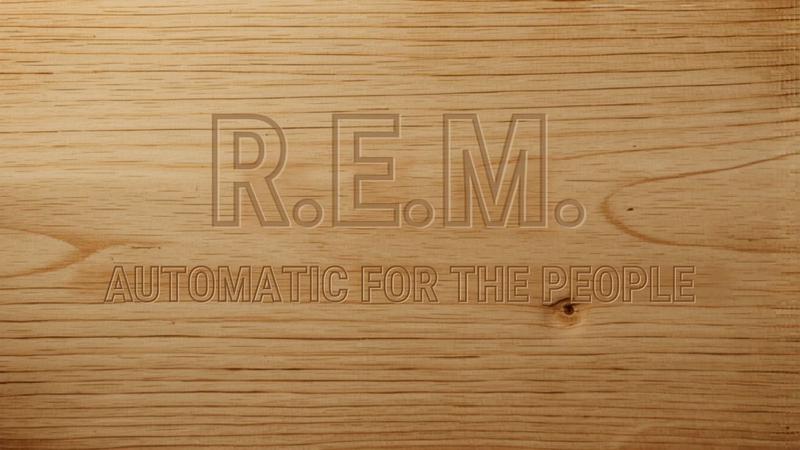
My copy of Automatic for the People came in a wooden box. Limited edition. Sixteen “art” cards with photos and other highbrow stuff. One compact disc with a picture sleeve. I still have it. Although I have a strong feeling that the CD itself got scratched to the point of unplayability, as many of my records and CDs did in the following decades, with a family in the house.
I’m covering the “Love is on the Air” show on Lichfield Radio this Sunday, from 10am to midday. At some point, I’m going to play R.E.M.’s Nightswimming. It’s a Sunday morning show on a station that’s about positivity. This song might not look like a positive choice. It is. Let me explain why.
In 1995, Karen Daniels, later Taylor, was diagnosed with an untreatable brain tumour. A recurrence of one she’d been treated for two years earlier. We married on 19 April 1996, six months into her illness. She died on 8 May 1996. Three weeks after the wedding.
I was 21 years old. I had not even lost a grandparent at that point.
In hindsight, I didn’t process it. I know that now. I thought I was “coping well”.
I wasn’t diagnosed as autistic until much later. Recently, in fact. At the age of 50, in 2022. But the pattern was rather obvious in retrospect. How it took so long for me to realise I was AuDHD is harder to understand than the fucked up way my brain works in the first place.
The emotions existed. I just couldn’t reach them. So I filed them somewhere and got on with existing.
Except. Losing your wife is quite a major downer. It’s not the kind of thing you just shrug your shoulders at and get back to life. It demands your upset. It will impose upset upon you. But not consistently. It will wait, and then it will become the only thing you can think of unless you face it.
When that happened, when I had to acknowledge it, I had no practised way of letting that hurricane demon out of the bottle. There was no release mechanism. So, I’d have to sit alone with a bottle of Jack Daniel’s and put on either Nightswimming or the film Braveheart. Sometimes both. Or sometimes just the Braveheart soundtrack. Something in those pieces of music – I’m not sure I could tell you what even now – something broke down whatever barrier I’d built. Or maybe it overwhelmed any possible barrier I could have. And then I’d feel. I’d genuinely, intensely, uncontrollably feel. With all of the physical responses you’d expect. I’d sob myself to sleep. Properly.
Which sounds bleak. It wasn’t. It was the opposite of bleak. It was the only way through. It was a release. The following day, hangover aside, I was lighter. Less troubled. Still a decade or so from properly coming to terms with things, but at least able to function.
I was going to say “I’m not sad when I hear Nightswimming now”, but I’d be lying. It still evokes a loud echo of the feelings it did. But I understand the role it played in my life. And I’m grateful.
That’s what I want you to take from this. If you’ve come to read this after hearing my show.
It doesn’t make me grieve anymore. It reminds me that grief needs to come out if you’re going to deal with it. And that, for a period in my mid-twenties, a song by an American “rock” band, on a CD in a wooden box that I only bought because it was a limited edition “collectable”, was doing a job for me that I couldn’t do for myself.
And I’m grateful. That’s the main feeling I have when I hear the song now. Sadness, still. But grateful. And that’s why I want, regardless of all this baggage, to share the song and this story with you.